


A Flower
In the shady slopes of the French Tarn gorge, a flower has just bloomed. She is called Ladyslipper.


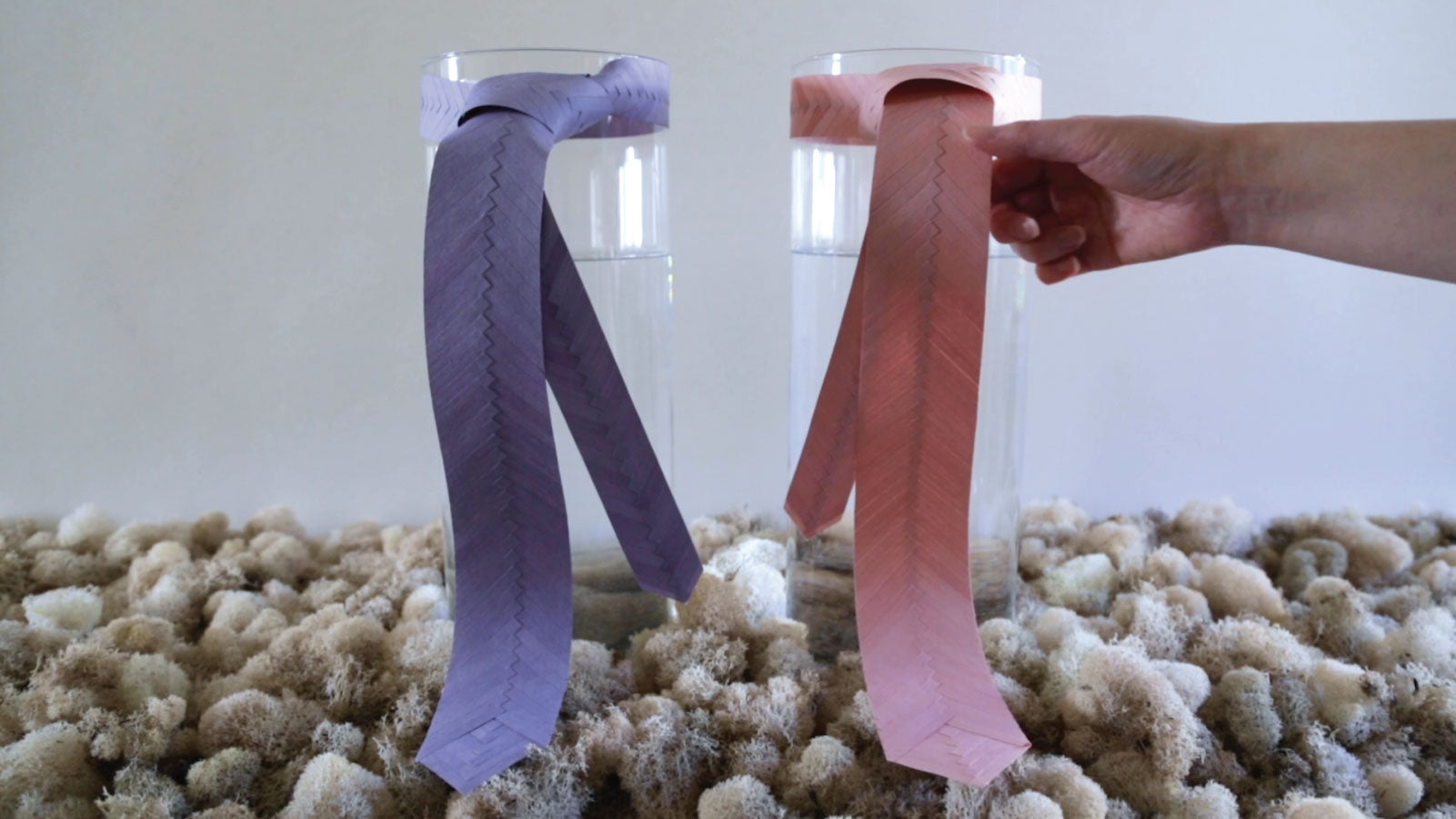
Under what conditions will something contradict itself, become fractured, replicate the oppositional framework in which it is nested, or — alternatively — embrace its other side or half, or become whole or integrated? One view of “difference” entails incompatibility, and the other, integration. Litmus paper’s color-changing ability comes from lichens, which are symbiotic fungi-algae associations that extend their intrinsic mutualism outward. Thousands of lichen species proliferate on many surfaces in a nonparasitic manner, using the surfaces as substrates and serving as substrates for other organisms. Biologist Scott Gilbert noted, “We are all lichens,” meaning human bodies are also associations of co-functioning organisms, rather than entities siloed apart from nature or each other. Here, clouds of lichen anchor and buoy the test and dream of democracy; the color break in the ties indicates not a “winner,” but the deconstruction of the oppositional, violent logic of “other” itself. Seeing ourselves reflected in all that appears “other,” we are compelled to engage with all that surrounds us with care and responsibility, rather than fear or exploitation. As lichens are incredibly diverse, so are we; like lichens, we have the potential and power to ground and express our differences through mutualism, rather than separatism or suppression.
Jennie E. Park is an artist, writer and curator interested in interdisciplinarity, integrated approaches to healing and honesty, and structural social change. (In)vulnerability and (in)visibility, and world-generating dynamics of entanglement and of truthful paradox, recur as practices, tools or obstacles she explores in relation to her work. She is currently an MFA student in Art and Creative Writing with a concentration in Integrated Media at California Institute of the Arts, and has written for Los Angeles-based Artillery Magazine and other arts publications.

href="#global-form" or data-global-form-trigger="global-form".


